Alright, let’s get into it! As your go-to English blog influencer, I’m all about uncovering those golden nuggets of information that truly make a difference in your day-to-day.
The digital world moves at warp speed, and honestly, it can feel like a full-time job just keeping up with the latest trends and essential tips. I’ve spent countless hours sifting through the noise, trying out new strategies, and diving deep into what really works to bring you content that’s not just informative but genuinely useful.
My goal is always to deliver fresh perspectives and practical advice that you can apply right away, whether it’s boosting your creativity, navigating tech, or simply finding smart ways to enhance your life.
It’s about building a space where you feel empowered and excited about what’s next, keeping you engaged and coming back for more of what truly helps. I deeply believe in sharing knowledge that’s been tried and tested, ensuring that what you read here is not just theory but real-world experience you can trust.
*Have you ever wondered about the magic behind your favorite electronic music tracks, or how musicians create such intricate layers of sound with seemingly endless possibilities?
It’s genuinely mind-blowing when you think about it! For years, synthesizers have been the heart and soul of innovative sound creation, shaping genres and pushing artistic boundaries.
But what truly unlocks their full potential is often the seamless dance they perform with MIDI. This powerful connection isn’t just for seasoned pros anymore; with new advancements like MIDI 2.0 and the increasing role of AI, it’s becoming more accessible and expressive than ever before, inviting more of us into this exciting world of sonic exploration.
Understanding how these two titans of music technology intertwine can truly transform your creative process, offering precision, flexibility, and a whole new level of control over your sound design.
Let’s really dive into how synthesizers and MIDI work together to create incredible music.
Unlocking Sonic Worlds: The Core Connection
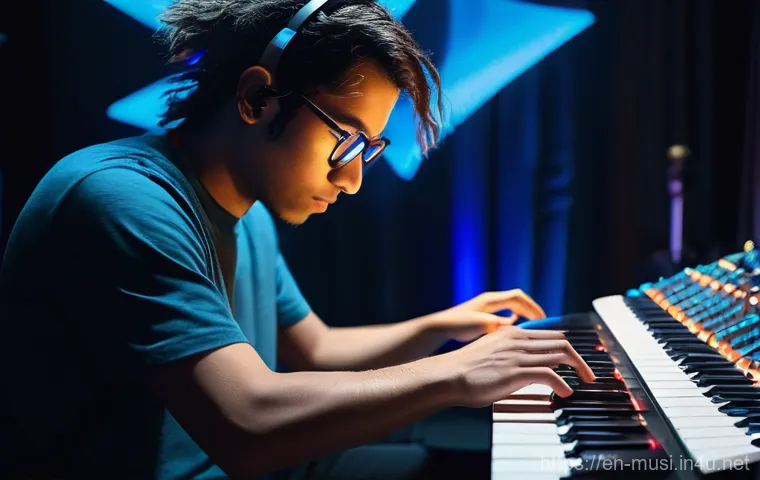
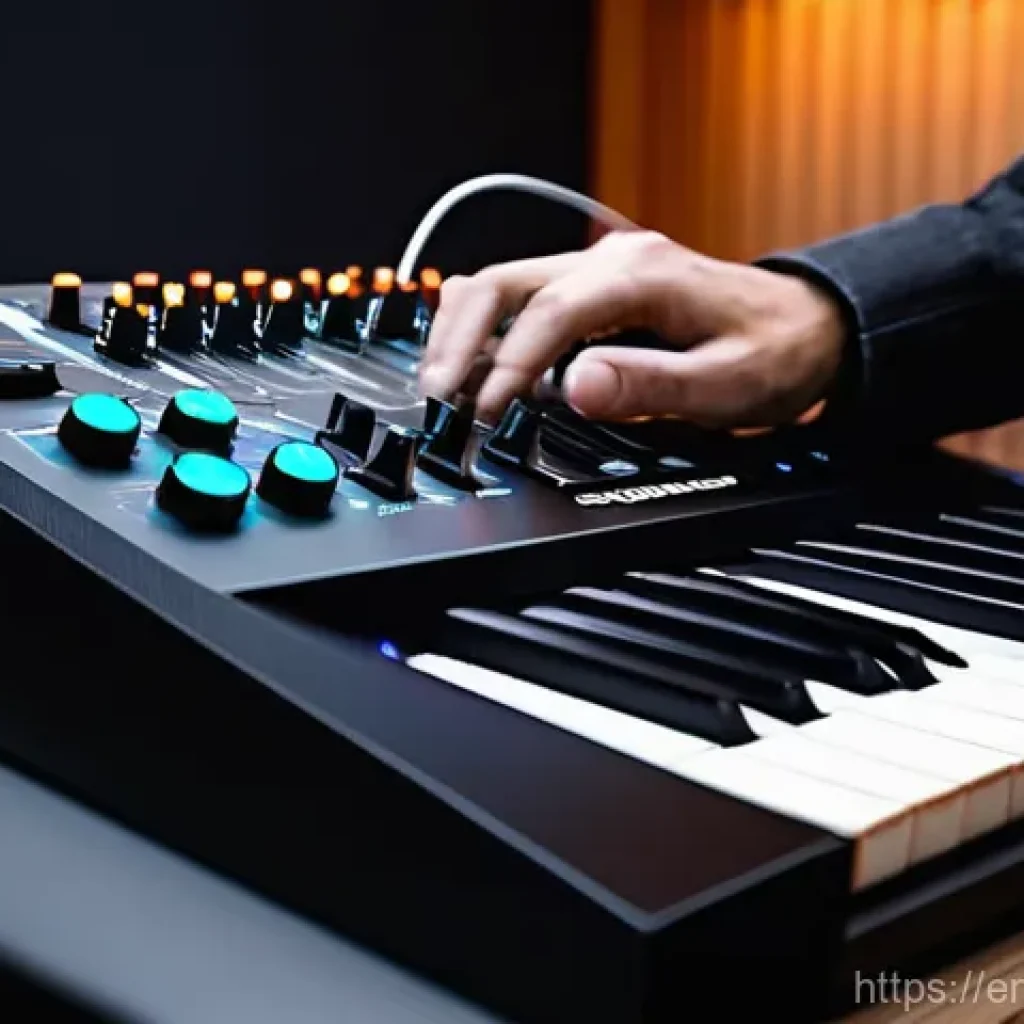
There’s something truly magical about bringing a sound from your imagination into reality, isn’t there? For me, that spark often ignites the moment I connect my favorite synthesizer to a MIDI controller. It’s like these two pieces of gear were always meant to be together, a dynamic duo in the realm of music production. When I first started messing around with synthesizers years ago, I was captivated by the sheer variety of sounds they could produce, but honestly, I felt a little limited by just the onboard keyboard or knobs. It wasn’t until I properly delved into MIDI that the real potential exploded. Think of MIDI as the universal language that lets your instruments talk to each other. It doesn’t transmit audio; instead, it sends messages – things like “key pressed,” “note off,” “pitch bend,” or “mod wheel moved.” This distinction is absolutely crucial because it means you have incredibly precise control over every nuance of your synth’s sound. From my own experience, mastering this foundational connection transformed my workflow, allowing for much more expressive performances and intricate sound design than I ever thought possible. It really opens up a world where your creative ideas aren’t hampered by technical limitations, letting you focus purely on the music.
The Digital Handshake: How MIDI Speaks to Your Synth
At its heart, the MIDI connection is a digital handshake. When you press a key on a MIDI keyboard, it doesn’t send the sound of the key itself, but rather a digital message detailing *which* key was pressed, *how hard* (velocity), and *for how long*. Your synthesizer then receives these messages and translates them into the actual audio you hear. It’s a beautifully efficient system, and for someone like me who loves to layer sounds and create complex arrangements, it’s indispensable. I remember one time struggling to get a specific feel for a bassline using just my synth’s sequencer, and then the moment I hooked up my MIDI controller and played it in, it instantly had that human touch I was looking for. It just makes everything feel more natural and responsive, allowing for a level of control that’s almost intuitive once you get the hang of it.
Beyond Notes: Expressive Control with MIDI Messages
But MIDI is so much more than just note on/off messages. This is where things get really exciting for sound designers and performers. We’re talking about pitch bend wheels that let you glide between notes, modulation wheels that can be assigned to vibrato, filter sweeps, or even LFO rates, and a whole array of continuous controllers (CC messages). These CC messages are pure gold because they allow you to map physical knobs and faders on your MIDI controller to virtually any parameter on your synthesizer. I’ve spent countless hours tweaking filter cutoff, resonance, and envelope settings in real-time using MIDI CCs, turning what could be a static synth patch into something alive and evolving. It’s this granular level of control that truly allows you to imbue your music with emotion and dynamic movement, making your tracks stand out from the crowd.
Crafting Your Signature Sound: Beyond the Presets
Let’s be real, while factory presets on synthesizers are great starting points, the real magic happens when you start crafting your own sounds. This is where the synergy between a synthesizer and MIDI truly shines, allowing you to sculpt unique textures and tones that become hallmarks of your personal style. I’ve found that some of my most distinctive sounds come from hours of experimenting, mapping various MIDI controls to obscure parameters on a synth, and just seeing what happens. It’s an incredibly rewarding process, almost like being a sonic sculptor. You start with a raw block of sound, and through careful manipulation via MIDI, you chisel away, add layers, and refine it until it’s something truly original. This isn’t just about making noise; it’s about giving your music a unique voice that listeners can instantly recognize as yours. I’ve learned that patience and a willingness to explore the uncharted territories of your synth’s capabilities, guided by the precision of MIDI, are key.
Deep Dive into Synthesis: MIDI’s Role in Sound Design
When you’re really diving deep into sound design, MIDI becomes your most trusted companion. Imagine having a synth with a complex modulation matrix. With MIDI, you can externalize control over multiple parameters simultaneously. Want to modulate the filter cutoff with an LFO while also sweeping the oscillator’s waveform and adjusting the delay feedback, all with physical controls? MIDI makes it not just possible, but incredibly intuitive. I often set up custom control maps for my favorite soft synths in my Digital Audio Workstation (DAW), assigning physical knobs on my hardware controller to crucial sound-shaping parameters. This hands-on approach, driven by MIDI, means I spend less time clicking with a mouse and more time performing and interacting directly with the sound, leading to more organic and expressive results. It’s a game-changer for staying in a creative flow and really getting inside the sound.
Layering and Textures: Building Sonic Landscapes
One of the most powerful applications I’ve discovered through MIDI is the ability to layer multiple synthesizers, both hardware and software, to create incredibly rich and complex textures. You can have one MIDI track in your DAW sending the same note information to three different synths, each playing a slightly different timbre. Then, you can use separate MIDI CC messages to subtly adjust parameters on each synth, creating a moving, evolving soundscape. I love setting up unison voices across several synths, slightly detuning each, and then using a single MIDI fader to control a global filter sweep. The depth and width this creates are just breathtaking. It’s like painting with sound, adding shades and dimensions that a single synth simply couldn’t achieve on its own. This technique has consistently helped me achieve that “big” sound I often strive for in my productions.
The Digital Revolution: MIDI’s Evolution and Impact
It’s hard to imagine modern music production without MIDI, but it’s come a long, long way since its inception in the early 80s. What started as a revolutionary way for different electronic instruments to communicate has continually evolved, adapting to new technologies and pushing the boundaries of what’s possible in music. From the simple 5-pin DIN cables connecting a few pieces of hardware to the ubiquitous USB-MIDI interfaces of today, and now with the exciting advent of MIDI 2.0, this protocol has remained an essential backbone. I remember getting my first MIDI interface for my computer back in the day, and it felt like I’d suddenly gained access to a superpower. The ability to record and edit MIDI data in a sequencer, then send it back to my synths, completely transformed my creative process. It took away the pressure of perfectly playing every single note, allowing me to refine performances and experiment endlessly.
From 1.0 to 2.0: A Leap in Musical Expression
The original MIDI 1.0 specification was groundbreaking, but after nearly 40 years, it was definitely due for an update. Enter MIDI 2.0, and let me tell you, it’s a game-changer. The biggest draw for me is the bi-directional communication, meaning devices don’t just send information; they can *talk back* to each other. This opens up incredible possibilities for auto-configuration and better integration. But what really excites me is the increased resolution for expressive control. We’re talking about 32-bit resolution for velocity, pitch bend, and other continuous controllers, which is a massive jump from the 7-bit resolution of MIDI 1.0. This means smoother, more nuanced changes in sound, translating to much more realistic and expressive performances. I’ve already started seeing new controllers that leverage this, and the difference in how subtly you can manipulate a sound is just astounding. It’s like going from standard definition to 4K in terms of sonic detail, offering an unparalleled level of finesse.
Software Integration: DAWs and Virtual Instruments
While MIDI originated with hardware, its integration with Digital Audio Workstations (DAWs) and virtual instruments has solidified its place as the bedrock of modern music production. My studio setup, like many others, heavily relies on a blend of hardware synths and software plugins, all orchestrated via MIDI. Being able to record MIDI data from a controller, edit it meticulously in my DAW’s piano roll, and then route it to any hardware or software synth, offers unparalleled flexibility. It’s incredible to me how a simple MIDI clip can trigger a massive orchestral sample library or a gritty analog soft synth, all with the same underlying protocol. This seamless integration has democratized music production, making high-quality sound design and complex arrangements accessible to anyone with a computer. I find myself constantly switching between controlling a vintage hardware synth and a cutting-edge plugin, all thanks to MIDI’s versatile nature.
Hands-On Harmony: Practical Setup for Musicians
Getting your synthesizers and MIDI gear to play nicely together might seem a little daunting at first, especially with all the cables and ports, but trust me, it’s much simpler than it looks once you grasp the basics. I remember my first few attempts at setting up my home studio; it was a tangled mess of MIDI cables and audio jacks, and I spent more time troubleshooting than making music! But with a few key principles, you can create a robust and reliable setup that empowers your creativity instead of hindering it. The most common setup usually involves a MIDI controller (like a keyboard or pad controller) connected to a computer via USB, and then your DAW sends MIDI data out to your hardware synthesizers, often through a dedicated MIDI interface if your computer doesn’t have one built-in. It’s all about understanding the flow of information, and once that clicks, you’ll be amazed at how quickly you can get everything up and running. A stable and efficient setup means more time for making music, which is what we all want, right?
Connecting Your Gear: The Essential Wiring
The physical connection is where it all begins. For most modern setups, a USB cable is your best friend. Many synthesizers and MIDI controllers today come with a USB port that handles both power and MIDI data. This simplifies things immensely compared to the older days of 5-pin DIN cables and separate power adapters. However, for older hardware or more complex studio setups, you’ll likely still encounter those classic 5-pin MIDI In/Out/Thru ports. The ‘In’ port receives MIDI data, ‘Out’ sends it, and ‘Thru’ passes on the incoming data without processing it. A common scenario is connecting your MIDI controller’s ‘Out’ to your synth’s ‘In’. If you have multiple synths, you might daisy-chain them using the ‘Thru’ port, or use a dedicated MIDI interface with multiple ‘Out’ ports from your computer. I personally prefer a good MIDI interface for its reliability and flexibility, especially when I’m running several hardware pieces at once, ensuring everything is perfectly synchronized. It’s an investment that pays off in spades by preventing frustrating connection issues.
Common MIDI Setups for Studio & Live
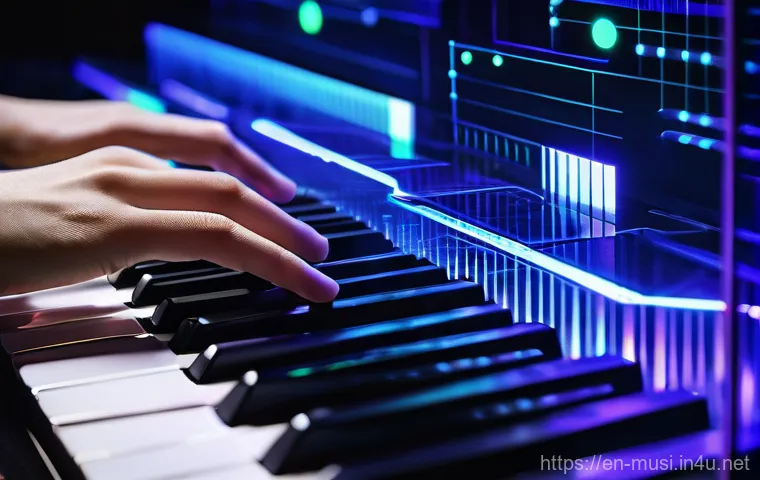
Whether you’re crafting tracks in your home studio or rocking out on stage, your MIDI setup will look a little different, tailored to your specific needs. In the studio, a common setup involves a main MIDI keyboard controller connected to your computer, which then acts as the central hub, sending MIDI information to both software instruments within your DAW and any external hardware synths. This allows for seamless recording, editing, and automation. For live performance, simplicity and reliability are paramount. Often, I’ll use a single MIDI keyboard controller to trigger multiple sound modules or software synths running on a laptop, perhaps with a dedicated MIDI foot controller for patch changes or effects. Minimizing cables and points of failure is key when you’re under pressure on stage. I’ve put together a quick table outlining some common approaches that have worked well for me and many other musicians:
| Setup Type | Description | Key Benefits | Common Use Case |
|---|---|---|---|
| Simple Studio | MIDI Keyboard to Computer (USB) controlling DAW/Plugins. | Easy setup, great for beginners, cost-effective. | Bedroom producers, learning synthesis. |
| Hybrid Studio | MIDI Keyboard to Computer (USB), MIDI Interface from Computer to multiple Hardware Synths (DIN). | Combines software flexibility with hardware warmth, extensive sound palette. | Intermediate to professional producers, diverse sonic needs. |
| Live Performance | MIDI Controller to Laptop (USB) running live performance software or sound modules. | Portability, quick patch changes, robust for stage. | Gigging musicians, electronic bands. |
| Controller-Only | MIDI Controller directly to Hardware Synth (DIN) without a computer. | Minimal latency, dedicated workflow, great for jamming. | Improvisation, pure hardware enthusiasts. |
Performance Powerhouse: Live Gigs and Studio Flow
For me, the true test of any musical setup is how it performs under pressure, whether that’s the adrenaline rush of a live gig or the focused intensity of a studio session. And honestly, MIDI, in conjunction with synthesizers, is the absolute bedrock of my performance and production workflow. The reliability and flexibility it offers are just unmatched. On stage, I need to know that when I hit a key or tweak a knob, the sound is going to be exactly what I expect, every single time. MIDI provides that precision. In the studio, it allows for an incredible level of creative freedom, enabling me to capture ideas quickly, refine them meticulously, and ultimately bring my musical visions to life with an efficiency that wouldn’t be possible otherwise. It’s not just about making music; it’s about having a seamless, intuitive experience that keeps you fully immersed in the creative process.
MIDI on Stage: Synchronized Performances
Stepping onto a stage with a well-configured MIDI setup feels like having a secret weapon. I’ve performed in countless live shows where MIDI was essential for synchronizing multiple synthesizers, drum machines, and even lighting cues. Imagine triggering a complex arpeggio on one synth, while simultaneously sending a program change message to another synth to switch to a lead sound, and then having a MIDI clock keep your entire rhythm section perfectly in time. It’s glorious when it all works! I’ve even used MIDI controllers to map expressive parameters to foot pedals, allowing me to morph sounds while keeping my hands on the keys. This level of control means that live performances are dynamic and engaging, and I’m not just pressing play on a backing track. It truly allows for improvisation and real-time interaction with the audience, making each show unique. The energy you can generate when everything is perfectly synced through MIDI is just electric.
Studio Efficiency: Recording and Automation Workflows
In the studio, MIDI supercharges my workflow, especially when it comes to recording and automation. I can lay down a basic chord progression with one synth, then easily duplicate that MIDI track and send it to a different synth for layering. If I mess up a note, it’s a quick fix in the piano roll; no need to re-record the entire take. But where MIDI truly excels for me in the studio is automation. I often record live knob twists and fader movements on my MIDI controller, capturing every subtle nuance of my performance directly into my DAW as MIDI CC automation. This allows for incredibly detailed and dynamic arrangements, where filters sweep, volumes swell, and effects bloom exactly when I want them to. It transforms static loops into evolving musical pieces and ensures that my tracks always have that human feel. It’s like having an invisible assistant meticulously documenting every creative decision I make, allowing for endless refinement.
Future Frequencies: AI and the Next Wave of MIDI Innovation
The world of music technology is constantly evolving, and honestly, it’s thrilling to be a part of it. Just when I think I’ve seen it all, something new comes along that makes me rethink how I approach sound. Right now, the buzz around artificial intelligence (AI) and its potential integration with MIDI and synthesizers is something that truly has me excited. We’re already seeing glimpses of AI assisting with everything from generating melodies and chord progressions to even helping design complex synth patches. When you couple this with the advanced capabilities of MIDI 2.0, the possibilities feel almost limitless. It’s not about AI replacing human creativity, but rather acting as an incredible co-pilot, opening up new avenues for exploration and accelerating the creative process in ways we could only dream of a few years ago. I genuinely believe that these advancements will empower musicians of all levels to push their artistic boundaries further than ever before.
AI as Your Co-Pilot: Intelligent Sound Creation
I’ve been dabbling with some of the emerging AI tools that work with MIDI, and it’s genuinely fascinating how they can spark new ideas. Imagine an AI that analyzes your melodic ideas and then suggests harmonies or counter-melodies, all expressed as MIDI data that you can then feed to your favorite synthesizer. Or an AI that can learn your preferred sound design aesthetics and then generate unique synth patches that fit your style, again, all controllable and tweakable via MIDI. While I still love the hands-on approach of designing sounds from scratch, these AI co-pilots offer a powerful way to break through creative blocks or explore sonic territories I might not have considered on my own. It’s about augmenting human creativity, not replacing it, and for someone always looking for fresh inspiration, it’s an incredibly compelling development. The ability to quickly iterate on ideas and explore variations is a huge time-saver and a creativity booster.
Beyond the Horizon: The Evolving Landscape of MIDI
With MIDI 2.0 now a reality and AI making inroads into music creation, the future of how we interact with synthesizers and sound is incredibly bright. I envision a future where our instruments are even more intelligent and responsive, adapting to our playing style and offering dynamic feedback in ways we haven’t even fully imagined yet. Imagine synths that can understand your expressive gestures via advanced MIDI controllers and automatically tweak subtle parameters to enhance your performance. Or collaborative AI systems that can help ensembles stay perfectly in sync, even across geographically dispersed locations, all powered by an evolved MIDI protocol. It’s a testament to the enduring power and adaptability of MIDI that it continues to be at the forefront of these innovations. As someone who’s spent years exploring the depths of electronic music, I can’t wait to see what new creative avenues these advancements will open up for all of us.
Wrapping Things Up
And there you have it, fellow sonic adventurers! What a journey we’ve taken through the incredible world of MIDI and its profound connection with synthesizers. It’s truly mind-boggling to think about how this seemingly simple protocol unlocks such immense creative power, isn’t it? From those first tentative connections to crafting complex soundscapes, MIDI has been my steadfast companion, pushing the boundaries of what I thought was possible. I genuinely hope that sharing my experiences and insights has sparked your own curiosity and encouraged you to dive deeper into the magic of making your instruments truly speak to each other. Don’t be afraid to experiment, tweak, and explore – that’s where the real fun begins and where you’ll discover your own unique sonic voice!
Useful Information to Know
1. Understanding the difference between MIDI and audio is foundational. Remember, MIDI doesn’t transmit sound; it transmits performance data – the “instructions” for what notes to play, how hard, how long, and what expressive changes to apply. This digital blueprint allows for incredible flexibility, letting you change the sound source while keeping the performance identical, or meticulously edit every detail without re-recording. This distinction is what gives you so much power over your arrangements and sound design, enabling you to experiment with different synth patches long after your performance is recorded.
2. MIDI channels are crucial when you’re working with multiple instruments. Just like radio frequencies, MIDI channels allow you to direct specific data to specific devices. Your MIDI controller might be sending data on Channel 1, while your first synth is listening on Channel 1, and your second synth on Channel 2. This way, you can play different parts on different instruments from a single controller or sequence multiple instruments independently from your DAW. It’s a lifesaver for complex setups and makes multi-timbral synthesis a breeze, allowing for rich, layered orchestrations.
3. While MIDI keyboards are the most common controllers, the world of MIDI expands far beyond them. You’ve got powerful pad controllers perfect for drumming and triggering samples, wind controllers that allow saxophonists to interface with synths, specialized guitar controllers, and even MPE (MIDI Polyphonic Expression) controllers that offer unprecedented per-note articulation. Exploring these alternative controllers can unlock entirely new ways of interacting with your synthesizers, injecting your performances with unique expressive qualities and truly bridging the gap between traditional instrument playing and electronic sound manipulation.
4. Troubleshooting MIDI issues can sometimes feel like chasing ghosts, but often, the solutions are simpler than they seem. Always start by checking your cables – a loose connection is a common culprit. Verify that your MIDI ‘Out’ is connected to your synth’s ‘In’ (and vice versa for bi-directional communication). Ensure your devices are set to the correct MIDI channels and that your DAW’s MIDI routing is configured properly. Sometimes, simply restarting your computer or MIDI interface can resolve stubborn connectivity problems. A little patience and a systematic approach will usually get you back to making music in no time.
5. The online community for music production and synthesis is a treasure trove of knowledge! Forums, dedicated YouTube channels (like those from Loopop, Andrew Huang, or Cuckoo), and websites like Gearspace or Reddit’s r/synthesizers are fantastic places to learn, ask questions, and discover new techniques. You’ll find countless tutorials, discussions on the latest gear, and inspiration from fellow musicians. Don’t hesitate to engage, share your experiences, and soak up the collective wisdom – it’s a vibrant and supportive community that can accelerate your learning curve dramatically.
Key Takeaways
In essence, MIDI is the foundational language that allows your synthesizers and other electronic instruments to communicate, turning abstract ideas into tangible sound. It’s the key to unlocking expressive control, enabling you to manipulate every nuance of your sound. Whether you’re layering complex textures in the studio or synchronizing multiple devices for a dynamic live performance, MIDI provides the precision and flexibility you need. With the advent of MIDI 2.0 and the integration of AI, the future promises even more intuitive and powerful ways to create music, continuously expanding our sonic horizons.
Frequently Asked Questions (FAQ) 📖
Q: What exactly is MIDI, and how does it revolutionize the way we interact with synthesizers and other music gear?
A: Think of MIDI, which stands for Musical Instrument Digital Interface, not as sound itself, but as the digital blueprint or a universal language that electronic musical instruments use to talk to each other.
It’s truly a game-changer! When I first learned about it, I realized it’s not like recording an audio file; instead, MIDI captures information about how you play: which note, how hard (velocity), how long you hold it, and even nuances from your modulation wheel or pitch bend.
This is revolutionary because it gives us unparalleled flexibility. Imagine playing a killer bassline on your keyboard, recording it as MIDI, and then deciding you want to hear it on a completely different synth sound, or maybe even an orchestral string section.
With MIDI, it’s just a few clicks away! You can easily fix mistakes without re-recording, quantize your performance to perfection, or completely transform the arrangement by simply dragging and dropping.
For me, this flexibility is where the real power lies – it allows me to experiment without fear and lets my creative ideas evolve much more freely than if I were stuck with just audio.
It’s like having a universal remote for all your musical instruments, giving you incredible precision and control over your sound design and compositions.
Q: How are the latest advancements, especially MIDI 2.0 and the integration of
A: I, changing the game for modern music production with synthesizers? A2: Oh, this is where things get really exciting, and honestly, it feels like we’re just scratching the surface!
MIDI 2.0 is a massive leap forward, giving us a much richer, more expressive experience. While MIDI 1.0 was fantastic for its time, it was a bit like a monologue – devices sent information, but they didn’t really have a two-way conversation.
MIDI 2.0 changes that with bidirectional communication, meaning devices can actually “talk” to each other, sharing their capabilities and auto-configuring.
What really gets my creative juices flowing, though, is the increased resolution. We’re talking 32-bit resolution for controllers now, which is a huge upgrade from the old 128 steps.
This translates to incredibly smooth, nuanced control over every parameter on your synthesizer, making performances feel much more organic and realistic – almost like the expressiveness you get from an acoustic instrument.
And then there’s AI! When AI meets MIDI, it’s like having a brilliant co-composer or sound designer right in your studio. AI can analyze your existing MIDI data to suggest chord progressions, generate fresh melodies, or even help you arrange entire tracks in a specific genre.
I’ve personally seen AI-powered tools transform my creative blocks into inspired breakthroughs, offering unexpected ideas for harmonies or rhythmic patterns.
It’s even revolutionizing sound design, with AI-powered synthesizers generating entirely new textures or emulating vintage gear with stunning accuracy.
This synergy means we can focus more on the artistic vision while AI handles some of the more technical or time-consuming aspects, pushing our creative boundaries further than ever before.
Q: I’m just starting my journey into synthesizers and MIDI – what’s the simplest way to get everything connected and begin making music?
A: Welcome to the club! Starting out can feel a bit daunting with all the gear and cables, but trust me, it’s easier than it looks, and the payoff is immense.
The simplest setup, in my opinion, involves a MIDI keyboard controller and your computer running a Digital Audio Workstation (DAW) like Ableton Live, Logic Pro, or FL Studio.
Most modern MIDI keyboards connect directly to your computer via a single USB cable, which handles both power and MIDI data. Once connected, your DAW should recognize it.
Then, within your DAW, you’ll load up a virtual synthesizer plugin. These software synths are amazing for beginners because they’re often more affordable than hardware and offer a vast array of sounds to experiment with.
You simply select the virtual instrument on a track, “arm” the track for recording, and start playing your MIDI keyboard – the notes you play will trigger the sounds from your software synth!
If you eventually get a hardware synthesizer, you’ll typically connect its MIDI OUT to your audio interface’s MIDI IN (if it has one) or directly to your computer via USB (if the synth supports it).
Remember, MIDI is data, not audio, so you’ll also need to connect your hardware synth’s audio output to your audio interface’s audio input to hear its sounds in your DAW.
Don’t be afraid to experiment! Every setup is a little different, but the core principle is about sending those precious MIDI instructions from your controller to a sound-generating device, whether it’s software or hardware.
You’ll be making incredible sounds in no time, and the joy of crafting your own music is truly a journey worth taking.